Rhythm Tiles: Pop Songs
- 4.6
- Rating
- 5.00M
- Installs
- Free
- Price

 Analysis by App-foxy
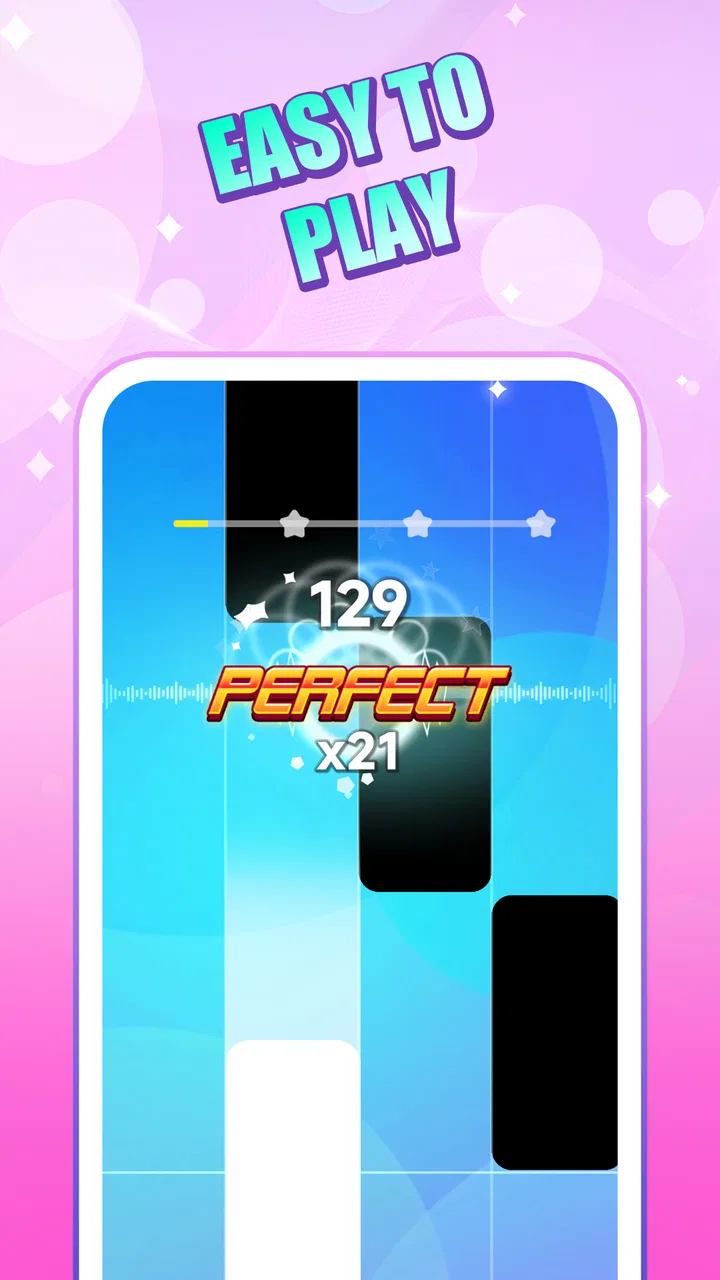
I spent time with Rhythm Tiles: Pop Songs as a light, tap-focused music game, and my first impression was easy to understand: it wants you to react to a beat without making you learn a complicated control scheme. The basic appeal is immediate. You listen, watch the play area, and tap in time, which makes it suitable for short sessions when I want something more active than a puzzle but less demanding than a full rhythm simulation.
That simplicity is also the most important thing to understand before installing it. This is a casual game from Agile Lion Games, not a replacement for a dedicated music-training tool or a deep rhythm title. I see it as a quick entertainment option for people who enjoy pop-song energy, K-pop-inspired presentation, and the satisfaction of keeping a sequence going. It is free, rated for Everyone, and the game has reached over a million installs, so it clearly fits the kind of experience many people can pick up without much preparation.
How Rhythm Tiles feels during ordinary play
I find the best way to approach Rhythm Tiles is as a brief, focused break rather than a game to leave running in the background. That expectation makes the first session feel more rewarding: I can pay attention to the beat, enjoy a few attempts, and stop before the simple loop starts to feel repetitive. Next, I’d make the setup comfortable so the first taps feel fair.
You May Also Like

 Google Keep - Notes and lists
Google Keep’s Quiet Growth Shows the Appeal of Simpler Notes
As mobile work gets busier, Google Keep keeps winning a simple contest: capture a thought quickly, find it later, and get on with the day.

 Blood Strike: 2.5 Anniversary
Blood Strike’s Loadouts Turn Every Drop Into a Tactical Gamble
A close look at Blood Strike’s custom loadouts: how fast access to signature weapons reshapes its battle royale rhythm, rewards preparation, and narrows the gap between fights.

 Pandora - Music & Podcasts
Pandora’s Music Is Easy to Start, but Harder to Recover
Pandora’s strength is its low-effort path from a seed to a station. Its weak spot is how much confidence it asks you to place in connection, setup, and quiet recovery.

 8 Ball Pool
 Is Built on Rivalries, Rematches, and Routine
A close look at the rivalries, rematches, shared routines, and unanswered safety questions that turn a quick pool match into a persistent mobile community.

 Samsung Music
’s Quiet Strength Is Playing What You Already Own
Its reach comes less from spectacle than from dependable access to a personal library. That simplicity is both the app’s strongest retention engine and its ceiling.

 AccuWeather: Weather Radar
AccuWeather Review: A Quick, Clear Forecast for Everyday Decisions
For everyday plans, the best forecast is the one you can understand quickly. AccuWeather makes rain timing, radar, and local conditions easy to act on, with a few trade-offs.
More From Our News Desk



Quick starts and the speed of the experience
The strongest part of the design is how little time I need between opening the game and making the first tap. A casual rhythm game works best when it removes unnecessary steps, especially on a phone where I may only have a few minutes. Rhythm Tiles: Pop Songs is built around that quick musical interaction rather than a long explanation, so it feels appropriate for a short break, a commute, or a few rounds before putting the phone away.
The perceived speed comes less from complicated movement and more from the relationship between the song and the tiles. When the timing feels natural, the game creates a pleasant loop: I watch the next target, listen for the pulse, tap, and immediately prepare for the following one. That rhythm keeps the experience lively even when the underlying action is simple. I would not describe it as a slow, thoughtful game; it asks for attention in small bursts.
That makes it especially approachable for someone who normally avoids rhythm games because they look intimidating. There is no need to understand a large control layout before trying a song. The phone screen remains the main point of contact, and the central action is clear enough for a first attempt. I can imagine handing it to a friend who likes music games but does not want to spend time learning advanced techniques.
There is a trade-off, though. Players who expect a detailed rhythm system may find the experience lighter than they want. The appeal is immediate response, not a long technical climb. If your favorite games are built around complex note patterns, precise difficulty tuning, or deep mastery, this title may feel more like a musical reflex toy than a serious practice environment.
What happens when a session becomes demanding
The game is at its most engaging when I stop treating every tap as an isolated action and start following the song as a whole. During a more active passage, small lapses in concentration matter more because the next target arrives before I have much time to recover mentally. That is where the casual format becomes surprisingly useful: it gives me a compact way to test focus without requiring a long commitment.
For everyday use, I would play it in a quiet moment rather than while doing something else. A short round may look easy to fit between messages or chores, but rhythm play depends on visual attention and timing. If I am walking through a busy place, talking with someone, or constantly switching away from the screen, the experience loses much of its appeal. The game is casual in commitment, not necessarily mindless during a song.
A practical routine is to use one or two rounds as a reset between tasks. I would not play it while trying to work, but I could use it after studying or during a break when I want an activity that feels more engaging than scrolling. The music gives the pause a clear beginning and end, while the tap mechanic prevents the session from becoming completely passive.
Heavy-use moments also expose the main limitation of a simple rhythm format: repetition can become noticeable if I play for too long without changing my goal. I get more value when I treat each session as a small challenge—improving timing, staying focused through a busier section, or simply enjoying a favorite musical mood—rather than expecting endless variety from the same basic interaction.
Stability, interruptions, and getting back into the game
My view of reliability here is tied to the game’s straightforward purpose. A rhythm title has to feel responsive enough that the tap-and-beat relationship remains understandable. When the presentation is clear, I can tell whether a mistake came from my timing or from losing concentration. That clarity matters more than a long feature list because the whole experience depends on a clean connection between what I see, what I hear, and when I touch the screen.
I also prefer to approach any phone rhythm game with a little patience after an interruption. If I leave the app during a song, receive a notification, or lock the screen, I would restart from a calm point instead of assuming the previous moment will continue perfectly. This is not a criticism of a specific function; it is simply the sensible way to use a timing-based game on a mobile device, where calls and alerts can appear at any time.
Recovery is better when I do not immediately blame myself for a missed sequence. I take a moment to re-establish the beat, then try again with my eyes slightly ahead of the current tile. That small habit is useful because staring only at the tile I am tapping can make the next one feel sudden. Watching the upcoming movement while listening to the music makes the game feel less frantic and gives me a better chance of recovering after a mistake.
For a casual release, that learning loop is important. I do not need a formal training plan to improve; I can simply play a short attempt, notice whether I was late or early, and adjust my attention on the next run. The game is therefore more rewarding for players who enjoy gradual personal improvement than for someone looking only for a passive music player.
Device fit and practical constraints
The game supports devices running Android 7.0 or later, which gives it a broad reach among Android users. That does not mean every phone will provide exactly the same feel. Rhythm games are sensitive to the way a particular device handles touch input, sound output, and screen responsiveness, so the best experience depends on the phone itself as well as the software.
I would be more comfortable playing with the device held steadily in both hands, especially when the pace becomes more active. A loose grip or an awkward position can make taps feel less deliberate. Screen size also affects comfort: a compact phone may make the action feel concentrated, while a larger display can give my eyes more room to follow the next target. Neither choice is automatically better, but the physical setup changes how relaxed the game feels.
The store summary presents it as an offline rhythm game, which is a meaningful advantage for people who want music-game entertainment away from a dependable connection. I would still prepare the game before leaving home and make sure the content I plan to use is available in the expected state. That simple habit avoids turning an offline-friendly idea into a frustrating travel experience caused by last-minute setup.
Offline play also changes where I would recommend it. It suits a flight, a waiting room, or a train ride where connectivity may be inconsistent. It is less useful if what you really want is a social music platform, a continuously updated streaming catalog, or a way to listen without interacting. The offline angle supports self-contained play; it does not turn the game into a general-purpose music service.
Resource demands are best considered realistically. This is a casual tap game rather than a visually elaborate action title, so I would expect it to be easier to fit into an ordinary mobile routine than a large, graphics-heavy game. Still, music playback and animated touch interaction require the phone to remain active, and long sessions can be less comfortable than short ones because of heat, battery use, or simple hand fatigue. I would keep sessions moderate on an older device instead of assuming that a lightweight concept means no practical cost.
Where it beats familiar alternatives—and where it does not
Compared with a standard casual puzzle game, Rhythm Tiles: Pop Songs gives me a stronger sense of momentum. A puzzle can be paused while I think, but this kind of play asks me to stay connected to a moving musical pattern. That makes it a better choice when I want a little energy and a reason to pay attention, rather than a quiet problem-solving activity.
Compared with a serious rhythm game, it is easier to approach but likely less satisfying for players who want a demanding long-term system. The casual category is part of its identity. I can recommend it to someone who wants quick musical interaction without a steep learning barrier, while I would point an experienced rhythm enthusiast toward a more specialized alternative if precision, complex progression, or competitive depth is the priority.
It also differs from simply playing K-pop or pop music in the background. Here, I am not only listening; I am responding to the beat. That distinction makes it useful when passive listening feels too dull, but it also means it cannot replace a music app when I want to relax with my eyes away from the screen. The right choice depends on whether I want to consume music or interact with it.
One non-obvious benefit is that the game can work as a quick attention check. I might use it before a long study block to see whether I am alert enough for focused work, or after a tiring day when I want a small activity that does not require planning. If my concentration is poor, the result is immediate; if I am in the mood, a few successful sequences can provide a satisfying reset.
Another useful approach is to separate device testing from skill testing. If taps suddenly feel inconsistent, I would first hold the phone firmly, reduce distractions, and try again in a stable position before deciding that my timing has worsened. This matters because a rhythm game can make ordinary handling problems feel like personal failure. Treating the setup as part of the experience leads to a fairer judgement.
Who should install it and who should skip it
I think it is a good fit for casual players who enjoy pop music, want short sessions, and prefer a control scheme that can be understood quickly. It is also a sensible choice for families looking for an Everyone-rated game, provided each player is comfortable with music-focused tapping and screen attention. The free price lowers the barrier to trying it, and the broad Android compatibility makes it practical for many people who do not use a recent phone.
I would be more cautious about recommending it to someone who wants a deep musical curriculum, detailed instrument practice, or a game built around complex competitive mastery. It is not the right tool for learning to play piano, improving formal rhythm notation, or replacing a dedicated music-training application. Its value comes from accessible interaction and quick entertainment, not from turning the phone into a structured lesson.
Players who dislike repetition should also keep their expectations measured. The game’s central pleasure is repeating a timing loop and getting more comfortable with it. That can be relaxing and rewarding, but it may not hold attention for hours. I would install it if I wanted a game to revisit in brief bursts, not if I needed one large adventure to occupy every evening.
There is a further practical question: will it work for someone sensitive to timing or sound? A rhythm game naturally depends on audio-visual coordination, so it is less suitable when I need a completely quiet, screen-light activity. The offline format helps with access, but it does not change the fact that the core experience is built around listening and tapping together.
Version, value, and the long-term impression
The current version is 0.1.2, which makes me approach it as an experience that may still be relatively early in its development. I would judge it primarily by how well the central loop works today rather than by expecting the breadth of a mature, long-established rhythm platform. That early-version context is worth remembering if you are deciding whether the game should become your main music title.
Its public response is encouraging: the game holds a 4.5 average from around two thousand ratings, alongside a smaller written-review conversation. I read that as a sign that the basic idea connects with many players, while still keeping my expectations practical. A strong average can tell me that the accessible concept works for its audience, but it does not guarantee that every player will enjoy the same pace, song style, or level of repetition.
The scale of its audience also makes the free model easy to understand from a user’s perspective. I can try the core experience without paying first, which is exactly what I want from a casual game whose appeal depends on personal taste. The sensible approach is to play a few short sessions, check whether the timing feels comfortable on my phone, and then decide whether it deserves a permanent place on the device.
My main tip for getting the best value is not to chase length. I would use it as a focused burst: choose a comfortable position, remove avoidable distractions, listen for the beat, and stop after the game stops feeling fresh. That approach protects the strongest part of the design—the quick musical reset—instead of exposing the limitations that appear when any simple loop is stretched too far.
My performance verdict
After considering speed, demanding moments, recovery, and device fit, I see Rhythm Tiles: Pop Songs as a focused casual rhythm game with a clear purpose. It feels most convincing when I want immediate tapping, a pop-oriented musical mood, and an offline-friendly option for short breaks. The Android 7.0 requirement keeps the entry point broad, while the free price makes experimentation easy.
I would not choose it for deep rhythm-game mastery or formal music practice, and I would avoid judging it by the standards of large, feature-heavy games. Its success depends on whether the central timing loop feels good on my particular phone and whether I enjoy returning to it in brief sessions. For the right player, that simplicity is a strength rather than a weakness.
My recommendation is to try it as a quick, low-commitment music game rather than as an all-purpose entertainment platform. If you want a straightforward way to turn a few minutes of listening into active play, Agile Lion Games has made a fitting option. If you need complex progression, extensive technical depth, or a passive listening experience, another category will serve you better.
FAQs for Rhythm Tiles: Pop Songs
01What is Rhythm Tiles: Pop Songs?
Rhythm Tiles: Pop Songs is an engaging rhythm-based game that combines the excitement of music with dynamic tile-tapping action. Players follow the beat of popular songs by tapping on tiles as they appear, challenging their reflexes and timing. It's designed for both casual players and music enthusiasts, offering a fun and immersive experience.
02Is Rhythm Tiles: Pop Songs free to play?
Yes, Rhythm Tiles: Pop Songs is free to download and play on both Android and iOS platforms. The game offers in-app purchases for additional features, such as song packs and customization options. While the core gameplay is free, purchasing these extras can enhance your overall experience.
03What types of songs are available in the game?
The game features a wide variety of pop songs, ranging from current chart-toppers to classic hits. Players can enjoy diverse music genres, ensuring there's something for everyone. Regular updates often introduce new tracks, keeping the playlist fresh and exciting for all music lovers.
04Does Rhythm Tiles: Pop Songs require an internet connection?
While the game can be played offline, an internet connection is required for downloading new songs and accessing certain online features. Playing offline limits some functionalities, such as leaderboards and multiplayer modes, but you can still enjoy the main gameplay without connectivity.
05How do the in-app purchases work in Rhythm Tiles: Pop Songs?
In-app purchases in Rhythm Tiles: Pop Songs allow players to buy additional song packs, remove ads, and access unique customization options. Purchases can be made through the app store linked to your device, and they enhance gameplay by offering more content and a smoother playing experience.
Pros
- Engaging and addictive gameplay.
- Wide variety of popular songs.
- Easy to learn
- hard to master.
- Smooth and responsive controls.
- Visually appealing interface.
Cons
- In-app purchases can be costly.
- Requires a stable internet connection.
- Occasional ads disrupt gameplay.
- Limited free song selection.
- Battery drains quickly during play.

Rhythm Tiles: Pop Songs
Gallery